Quick answer
Dental practice finance is business lending for dentists and dental groups to set up a new surgery, buy an existing practice, buy into a partnership or refurbish. Because dental fit-outs and equipment are capital-heavy, larger projects are often property-secured ($20,000 to $5,000,000), while trading practices can access unsecured options typically between $5,000 and $500,000 based on turnover and bank statements.
Key points
- Dental projects are capital-heavy: plumbing, suction, compressors and chairs make fit-outs costly per room
- Finance can cover greenfield surgeries, acquisitions, partner buy-ins and refurbishments
- Lenders look at chair utilisation, hygienist and associate income and the patient base
- Equipment-only purchases have their own page on dental equipment finance
- Loan size
- $20k – $5m secured; $5k – $500k unsecured
- Typical uses
- New surgery, acquisition, buy-in, refurbishment
- Key numbers
- Collections, chair days, active patients
- First step
- 60-second enquiry, no credit check
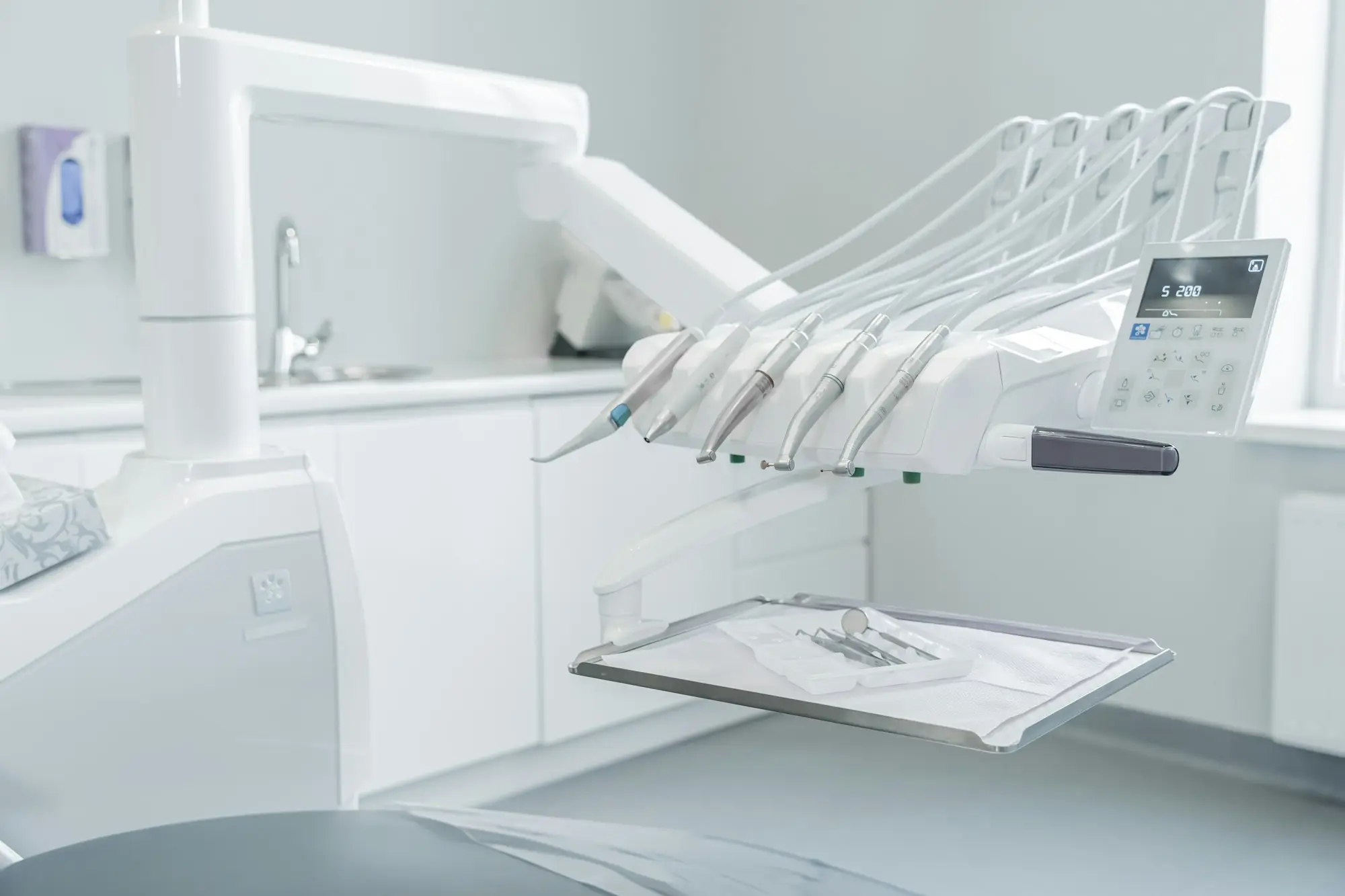
Dentistry is one of the most capital-intensive small businesses in health care. Each surgery needs plumbing to the chair, suction and compressed air lines, sterilisation flow, imaging and a lot of cabinetry. A general practice can open a consulting room with a desk, a bed and a computer. A dental room costs several times as much before the first patient sits down. That’s why dental practice finance is less about “can we borrow” and more about structuring the borrowing so the practice still has room to breathe.
What can dental practice finance fund?
Dentists and dental groups typically borrow for one of five reasons:
- A greenfield surgery. Leasing an empty tenancy and fitting it out from scratch.
- Buying an existing practice. Paying for goodwill, equipment and the patient base.
- Buying into a practice. Purchasing a share from a principal, often as an associate stepping up. See practice buy-in loans.
- Refurbishment or expansion. Adding a surgery, upgrading sterilisation or modernising a tired front-of-house.
- Equipment. Chairs, imaging, intraoral scanners and milling units, covered in detail on our dental equipment finance page.
How do lenders read a dental practice?
The headline figure is collections: what the practice actually receives, not what it bills. From there, a lender who understands dentistry will look at:
- Chair utilisation. How many days each chair is staffed and booked. Spare chair capacity is a growth story; a fully booked practice with no spare room might need to expand before it can grow.
- Provider mix. How much revenue comes from the principal, from associates and from hygienists or oral health therapists.
- Patient base. Active patients, recall rates and new patient numbers month by month.
- Revenue concentration. If one dentist produces most of the income and is the one selling or leaving, goodwill is worth less.
- Lease and location. Remaining term, options, and whether the landlord will consent to an assignment.
A lender isn’t auditing your clinical work. They’re checking that the income that repays the loan will still be there after settlement.
Secured, unsecured or a mix?
| Situation | Common structure |
|---|---|
| New surgery with no trading history | Property-secured loan, with a buffer for the ramp-up months |
| Buying an established practice | Property-secured loan over residential or commercial property; sometimes combined with vendor finance |
| Trading practice adding a surgery | Secured loan, or unsecured if the amount suits turnover |
| Short-term cash need (tax, a slow quarter) | Unsecured facility or line of credit |
Property-secured loans run from $20,000 to $5,000,000 and can be first mortgages, second mortgages or caveats over residential or commercial property. Unsecured, cash-flow and line-of-credit options for trading practices typically sit between $5,000 and $500,000, based on what your turnover and bank statements show. Earlier credit problems and ATO debt are assessed individually, never as an automatic no.
If you’ve got a quote in hand, a 60-second enquiry tells us enough to say which structure is realistic.
How much should a new dental surgery budget for?
Every build is different and we won’t publish averages we can’t stand behind. What we can say is what to include, because owners who leave items out are the ones who run short:
- Builder and fit-out costs, including services to each chair
- Chairs, delivery units and lights
- Imaging (intraoral, OPG or CBCT, depending on your model)
- Sterilisation equipment and the sterilisation room layout
- Practice software, IT, phones and data cabling
- Professional fees: designer, certifier, council or building approvals
- Signage and marketing for opening
- Working capital to cover wages and rent until the books fill
Our fit-out and equipment calculator lets you enter each of these, then shows the funding gap, what could be property-secured and how many months your buffer would last.
Which income does a lender actually count?
Dental revenue comes from several hands. A principal’s own production, associates paid on a percentage of collections, and hygienists or oral health therapists who may be employees or contractors. A lender working out repayment capacity looks at what’s left for the practice after those shares are paid, not the gross figure on the appointment book.
That’s why a practice with a strong hygiene program and long-standing associates often borrows more comfortably than one where the principal does almost everything. It also explains why buyers should look closely at how associates are engaged before settlement. If a key associate leaves in the first year, the income supporting the loan leaves too. Written agreements, reasonable notice periods and a plan to keep the team together are worth as much to the lender as they are to you.
An illustrative example
Illustrative only. An associate dentist has worked in the same regional practice for several years. The principal wants to retire over three years and offers to sell a half share now and the rest later. The associate has equity in an investment property. A lender could use that property to secure the first tranche, looking at the practice’s collections and the associate’s own production as the repayment source. The second tranche would be reassessed when it falls due, on the practice’s performance by then.
Before you commit: sensible checks
business.gov.au’s guidance on buying a business suggests reviewing three to five years of financial records, checking the lease and whether the landlord will consent to transfer, and searching the Personal Property Securities Register for anything registered over the equipment. For a dental practice, add a review of equipment age and service history, and the terms on which associates and hygienists are engaged. Our due diligence checklist goes through each step.
See if your practice qualifies
You’ve spent years building clinical skill. The business side deserves the same care. The enquiry takes about a minute, and there’s no credit check at that stage. We won’t circulate your details to a string of lenders, so your phone stays quiet between patients. A person who understands chair days and collections reads your enquiry and calls you.
Please answer the questions accurately, especially the amount, the purpose and any property you could offer, so the first conversation is useful.
Frequently asked questions
Can a newly graduated dentist get finance to open a practice?
It's possible, though a brand-new practice has no trading history for a lender to rely on. Property security, a detailed business plan and a realistic ramp-up forecast carry more weight in that case. Some dentists work as associates first to build a track record before opening their own surgery.
What does a lender look at when I buy a dental practice?
The vendor's collections over several years, the number of active patients, how much of the revenue follows the selling dentist personally, the lease, the condition of the equipment and whether associates and hygienists will stay. Goodwill is valued on those factors, and the lender will want to see that the price makes sense against them.
Is dental equipment covered by the instant asset write-off?
Eligible small businesses with aggregated turnover under $10 million can immediately deduct eligible assets costing less than $20,000 each, and the ATO says that threshold is permanent from 1 July 2026. Larger items such as chairs or imaging units usually cost more than that and are depreciated instead. Check with your accountant for your position.
Can I refinance an existing practice loan to fund a refurbishment?
Often, yes. A refinance can combine an older practice loan with new funds for the refurbishment, sometimes using property security to increase what's available. Whether it's sensible depends on the terms of the existing loan and any break costs.
Do health fund payments affect cash flow?
Most dental revenue from private patients is collected on the day, either as a gap payment or through on-the-spot health fund claiming. That makes dental cash flow steadier than many sectors, which lenders generally view positively.